









Are you tired of store-bought juices containing large amounts of chemical additives? Would you like to enjoy the taste of healthy and delicious drinks every day? Then you should consider purchasing a juicer. However, before you choose a juicer, familiarize yourself with the most important criteria determining its functionality. Check which elements of the product description are the most important from a customer's point of view and how a juicer works.
Fruit and vegetable juicers - the best juicers
Power, efficiency, waste container size, and drive are the basic parameters to pay attention to when choosing a juicer. If you plan to use the device occasionally, opt for a budget model with compact dimensions. Devices with higher efficiency and a large waste container, on the other hand, will be well-suited for families with small children and for those on a vegetarian or vegan diet, whose menus abound in fruit and vegetable cocktails. A juicer is an extremely functional device and at the same time the fastest method of juicing fruits, which allows you to preserve all the nutrients in the juicing process.
Juicer sieve - a key component
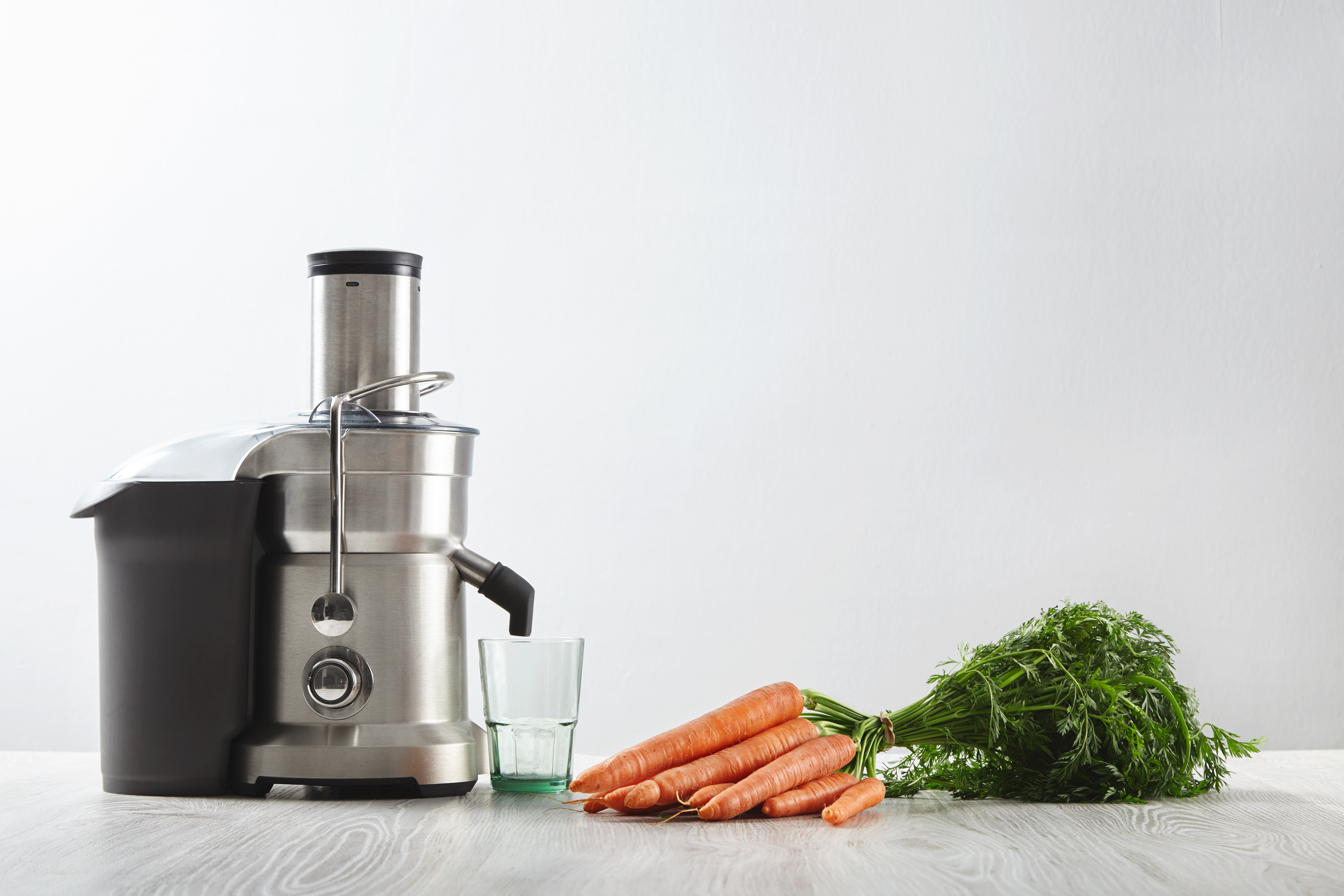
The sieve in a juicer rotates at speeds from 6,000 to 12,000 revolutions per minute, grinding fruits and vegetables into a smooth pulp. Freshly squeezed juice flows through the spout, while the pulp goes into the waste container. This construction means there is no need to manually empty the sieve while using the juicer or place an external container.
What makes some juicers more expensive than others? The key role is played by the materials from which the individual components are made. High-quality sieves, equipped with metal-centric blades, give more juice and clog more slowly. The highest-quality juicers have walls with a micro mesh that provide better permeability than perforated metal. If you aim for a higher shelf, pay attention to sieves where the central blades are made of stainless steel. Warning! We do not recommend low-quality sieves used in budget models made of poor quality plastic. Cheap juicing equipment is not only cumbersome to operate, but also contributes to the wasting of a large portion of fruits and vegetables.
Technical parameters - how does a juicer work?
Are you wondering what juicer would be suitable for a large family? If you plan to regularly use the equipment and want to maintain high efficiency, choose a model with a power of 500-600 W. The greater the motor power, the more efficient juicing of hard root vegetables. For soft fruits and vegetables, a device with a power of about 200 W will suffice. Of course, an excellent drink can also be prepared in lower power devices, but this will require much more time. In other words, the power of the juicer is an important parameter.
In brick-and-mortar and online stores, you will find various juicer models that allow free use without the risk of overheating. Remember, however, that most modern devices are equipped with two drives. High speed will be suitable for hard vegetables and fruits, even without prior cutting, while slower speeds will allow efficient extraction of soft vegetables. And it's worth noting here that an inexpensive juicer may not meet all expectations, and high power of the juicer is really useful!
Container and opening - juicer equipment
If you don't want to empty the device too often, choose a model with a larger waste container. For the largest appliances, the container capacity is up to 3.5 litres! When purchasing a juicer, it's worth checking whether the pulp container is removable or built-in.
One of the most important parameters defining the functionality of the device is the size of the opening. The larger it is, the faster you will achieve an excellent drink full of valuable nutrients. You also won't have to cut products into smaller pieces. You can put fruits into the device without prior processing.
Slow juicer or juicer?
The main difference between a juicer and a juice extractor (slow juicer) concerns the clarity of the juice obtained. Juice squeezed from a juicer is more watery, while that from a slow juicer is denser and enriched with pieces of fruit. It's worth noting that in both cases, we obtain drinks full of nutrients, but a slow juicer allows for obtaining more valuable juice. Unfortunately, the juicing process itself takes much longer, which may discourage some users. Warning! Slow juicers do not impose any limitations. While a juicer won't handle herbs, leafy vegetables, or small fruits, a juice extractor will extract the best from them.