


















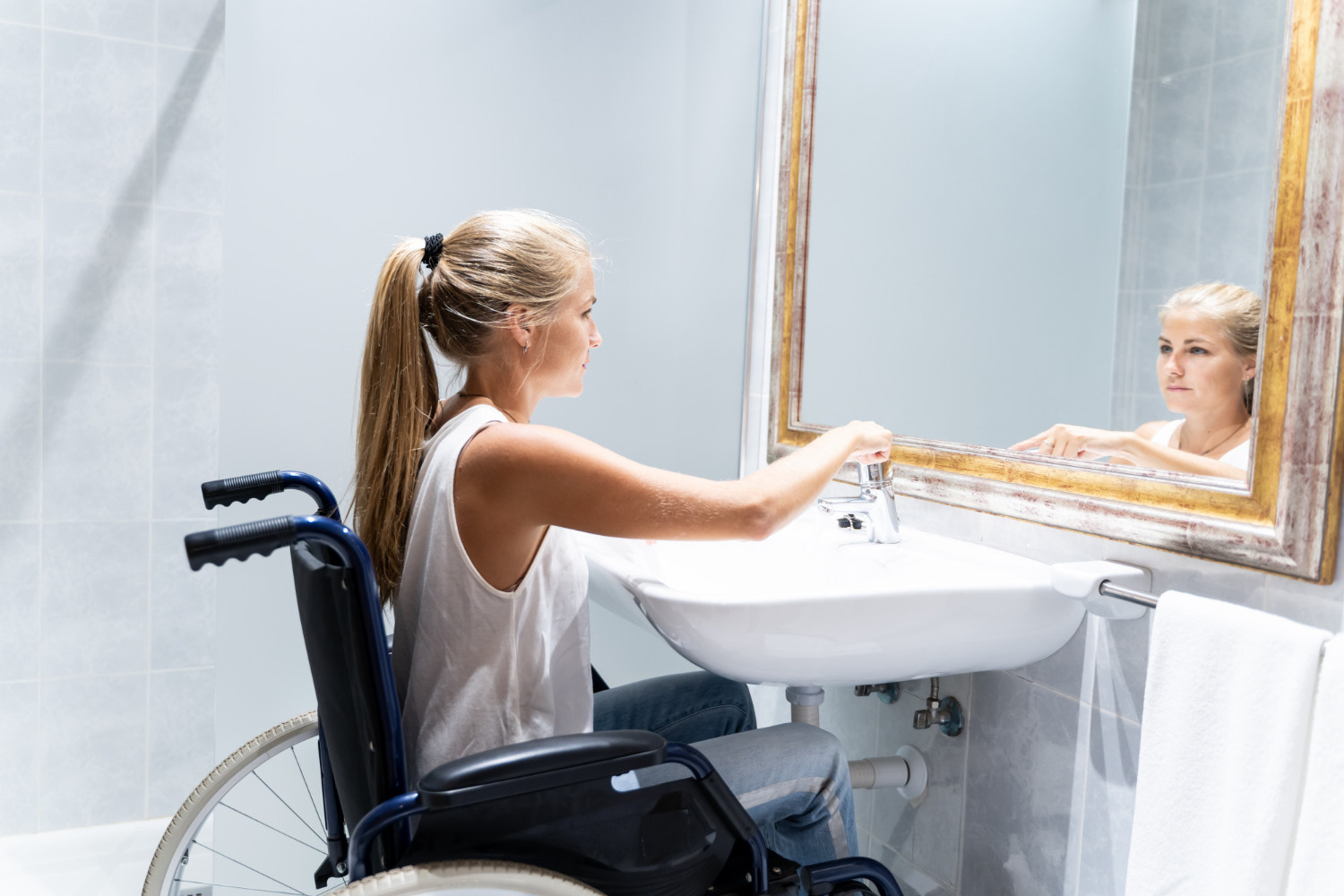
When finishing a bathroom for a person with disabilities or an older person, it is worth getting acquainted with the range of products intended specifically for such people. More and more companies producing bathroom fittings are also paying attention to the needs of people with disabilities. The simplest convenience will be the installation of foldable handrails in the shower or around the bath, which can be done independently without incurring significant costs. Installing special bathroom equipment and accessories can be a little more complicated, but it is increasingly easier to find those designed specifically with people with disabilities in mind and that are basic equipment for a bathroom for people with disabilities.
How to design a bathroom for a person with disabilities?
How to properly design a bathroom for people with disabilities largely depends on the type of disability and the level of independence of the person. A bathroom looks somewhat different for people using wheelchairs than for those with movement limitations that still allow them to walk independently. When considering this, remember that it must be comfortable and safe. Ideally, it should allow for relatively independent use of its various elements.
Particular attention should be paid to the door width and threshold height; for a person in a wheelchair, it is best to decide against having a threshold. This is also a convenient solution for older people with mobility issues, as it ensures relative freedom of movement in their own home. It is also worth paying attention to what a bathroom for people with disabilities should look like; a room equipped with specialized accessories should also simply be nice.
Bathroom equipment for people with disabilities
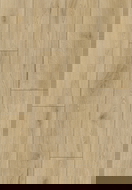
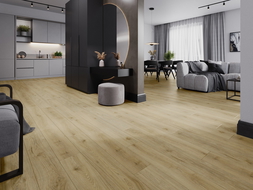
When finishing a bathroom for a person with disabilities, it is essential not only to place the right equipment but also to install it at the correct height. Also, do not forget that floor tiles or panels must be made of high non-slip material. This is especially important for people with disabilities walking on their own, as an accidental slip on a wet floor can end badly for them.
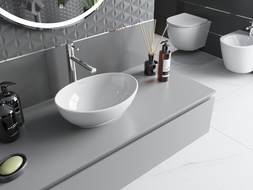
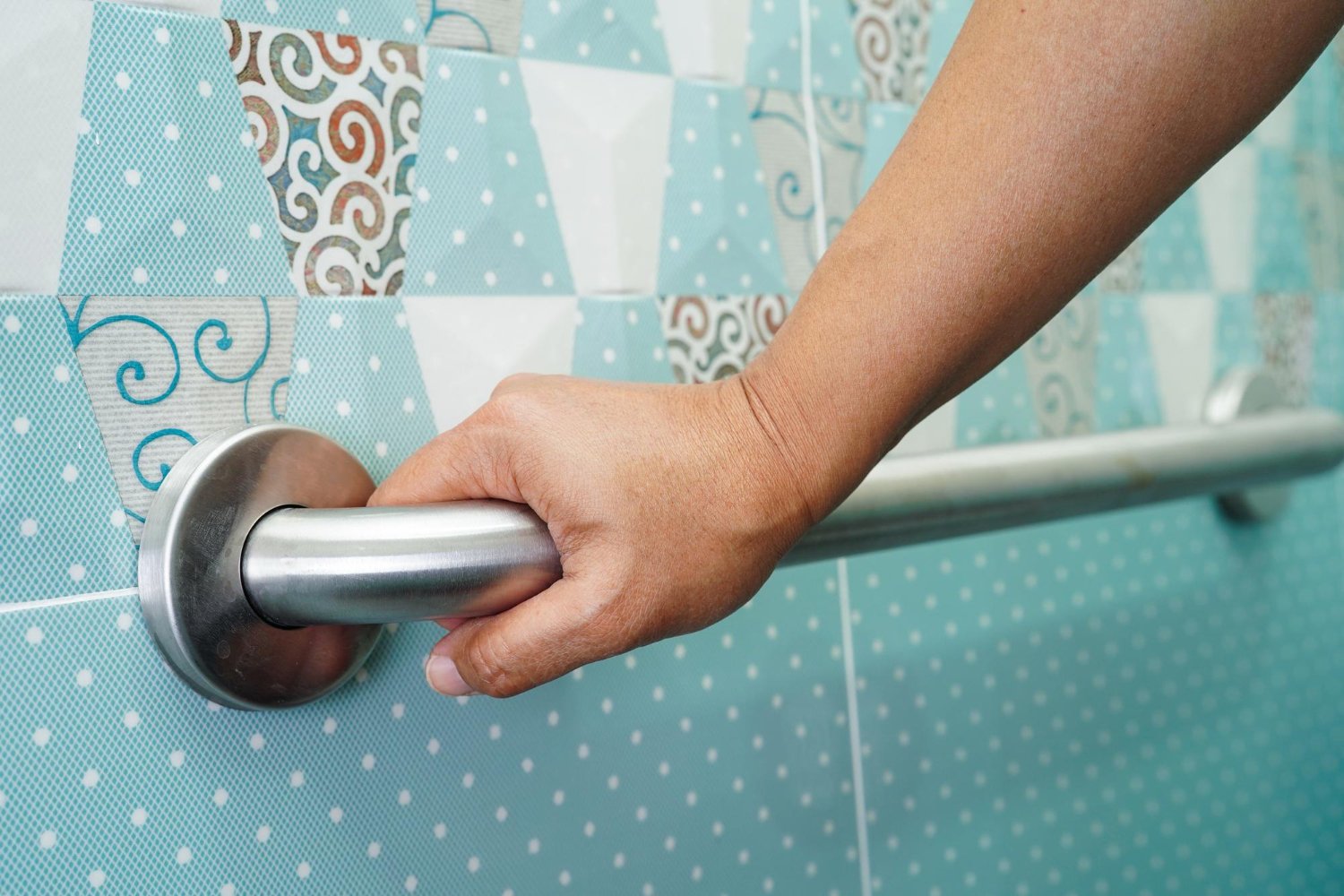
A critical element of such a bathroom's equipment is various types of wall handles mounted at a convenient height. When planning a bathroom for a person with a disability, consider making it easy to keep clean. Therefore, a great solution will be a wall-mounted toilet or bidet bowl and a washbasin mounted on a wall frame. Investing in a built-in tap provides high comfort of use and an elegant bathroom look.
This will definitely work in a bathroom for people with disabilities
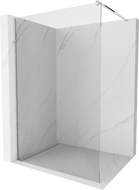
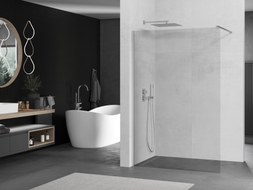
If you are planning to arrange a bathroom in which people with disabilities will feel comfortable, you must complement it with elements that are rarely found in a traditionally designed bathroom. Regardless of whether the future user is moving in a wheelchair or walking relatively independently, it is worth providing them with maximum safety while performing hygiene activities. An excellent example of solutions adapted to the needs of a person with a disability is a folding shower seat. If you add a walk-in shower cabin, which has no shower base and can be entered at floor level, you get an ideal solution for older people as well.
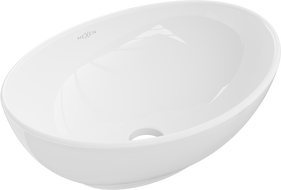
Equally important is the proper WC for people with disabilities, with wall handles on both sides, and a comfortable seat that should be adequately wide. A good solution is a WC bowl complemented by a washing function. Regarding washbasins, bathroom ceramics is now available with washbasins designed to include special cut-outs allowing a person in a wheelchair to use the tap conveniently.
Check what funding is available for bathroom renovation for a person with disabilities
A bathroom adapted to the needs of a person with a disability often requires significant financial investment. This is especially true if you want to furnish a bathroom for people with disabilities in an already existing building. Remodeling in private homes often requires widening door openings, removing thresholds in the room, and obviously installing appropriate equipment, starting from handrails and ending with a specialist bathtub. This often also involves replacing tiles, installing a different heating method, and replacing water supply and sewage connections.
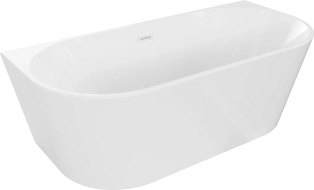
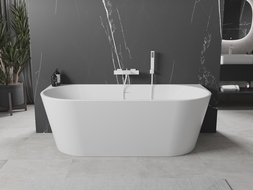
Fortunately, a person with disabilities is entitled to funding for adapting the bathroom to their needs. This is one of the tasks of the county, arising from the assumptions of social policy. A bathroom adapted to the needs of a person with disabilities must, of course, respect the building regulations in force in Poland. As part of the funding, you can receive funds for renovating the bathroom, including replacing a bathtub with a shower, purchasing a bathtub with doors, purchasing and installing wall rails and handles, and this also includes the appropriate washbasin, shower cabin, and even ceramic tiles adapted to the needs of people with disabilities. Applications for funding should be submitted to Municipal Social Welfare Centres, Municipal Family Support Centres, and District Family Assistance Centres. The amount depends on how large a fund the centre has and how many people with disabilities apply for assistance.
Related products
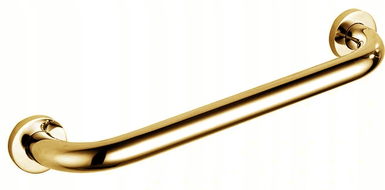
Mexen wall handrail 35 cm, gold - 70101630-50
€24.90 -19.72%
€19.99List price: €24.90
Lowest price: €19.99
Availability: In stock
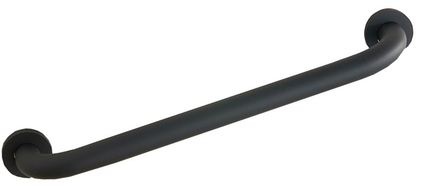
Mexen wall-mounted handrail 35 cm, black - 70101630-70
€21.40 -19.67%
€17.19List price: €21.40
Lowest price: €17.19
Availability: In stock
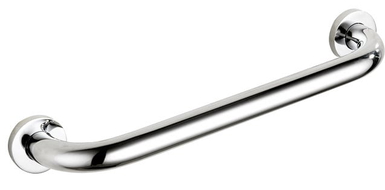
Mexen wall-mounted handrail 35 cm, chrome - 70101630-00
€19.70 -19.85%
€15.79List price: €19.70
Lowest price: €15.79
Availability: In stock