























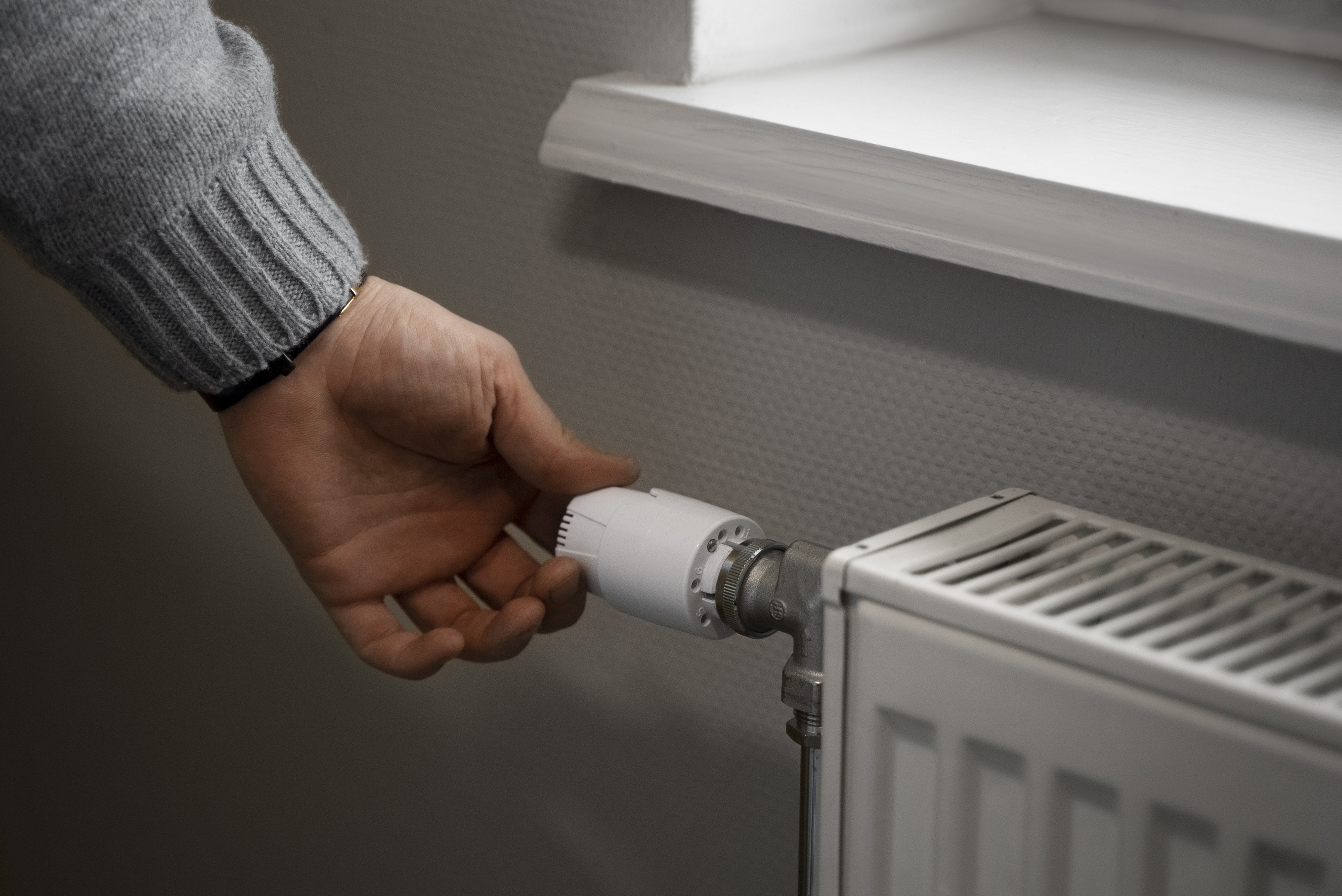
One of the most important stages in building a house is the proper distribution of the heating system. Choosing the right pipes for radiators and matching them to the heat source is crucial not only for the efficiency of the entire system but also affects energy savings.
What will you learn from this article?
Available on the market are plastic pipes, among other things, as well as popular copper variants. After reading the following article, you will know how they differ from each other. You will also learn:
- How to match pipes to the type of heat source?
- How to select pipes for specific technical conditions?
- What does a larger pipe diameter affect?
- Do plastic pipes have low thermal conductivity?
Why is choosing the right pipes for a heating installation so important?
Pipes used in a specific heating installation affect many important factors in the operation of the entire system. Above all, they impact the energy efficiency of the entire installation. Appropriately selected pipes allow for optimal water or other heating medium flow, resulting in a pleasant room temperature and minimal heat loss.
What pipe diameter will be optimal?
Before we draw your attention to how polypropylene pipes differ from metal ones, let's focus on what diameter will be optimal. You must know that too small a diameter can cause too high hydraulic resistance and uneven heating, whereas too large increases the volume of water in the system. Also, remember that increasing the diameter of the pipes comes with higher costs. When determining the optimal diameter, consider several factors:
- Type of heat source and its power — different heating systems, like gas boilers, heat pumps, or electric heating, have various requirements for water flow and pressure in the installation. The power of the heat source determines how much energy it can transfer to the radiators.
- Distance from the heat source to the farthest receiver — the further the distance, the larger the pipe diameter needed. In this way, you can ensure proper water flow and avoid pressure losses. This makes heating in the farthest rooms as efficient as at the boiler.
- Number of radiators and their type — in systems with a large number of radiators or aluminum radiators with high efficiency, a larger diameter translates to stable water temperature throughout the installation and impacts effective heating.
- Preferred room temperature — the higher the desired temperature, the more significant the pipe diameter. This way, you can avoid excessive cooling and overheating of rooms.
Different types of pipes for central heating
In the market, there are several types of pipes adapted to the needs of central heating. The basic division of heating pipes includes steel, copper, and those made of plastic. There are also multilayer pipes, which consist of at least three layers of different materials.
Copper pipes and their characteristics
Copper pipes are definitely among the most popular solutions used when planning central heating. Their great popularity stems in part from their extraordinary versatility of use, as they fit practically all popular C.O. systems. They work well with water heating with radiators and in cooperation with heat pumps, as well as solid fuel boilers.
Steel pipes
Steel pipes are also often used in installations. Their great advantage is excellent durability and enhanced thermal stability, influenced by their wall thickness and the low expansion of this material at high temperatures. For this reason, they can be successfully used in gas or water heating installations for many years. Without fear of accidental mechanical injuries and deformations, however, it should be remembered that, like any other, this material is not indestructible.
Plastic pipes (PEX and PP pipes)
Plastic pipes are also a very popular choice. PP pipes are durable and versatile. They are commonly used in water, heating, and even industrial installations. Available for sale are models dedicated specifically to cold water, as well as stabilized ones suitable for hot water and CO.
Multilayer pipes
An extremely innovative solution that is now often used in installations is multilayer pipes. This is an option for those who would like to enjoy the benefits of copper and steel pipes while also benefiting from the advantages of those made of plastic.
Which pipes to choose for the central heating installation?
Now you know which pipes for central heating are available on the market and how the different models differ. Metal pipes, those made of copper and steel, are first and foremost universal, long-lasting, and allow for efficient heat conduction. In contrast, those made of plastic are lightweight and easy to install, as well as support energy savings and more efficient heating. Layered pipes combine the advantages of both these solutions.
Properly plan the central heating installation in your home
The central heating installation has a huge impact on thermal comfort, energy efficiency, and the ability to freely use hot water. It should not be chosen hastily and without a specific plan. The choice of appropriate pipes, their type and diameter, as well as correct distribution in individual rooms, is one of the most important issues to take care of.
Related products
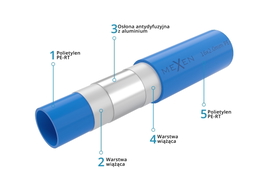
Mexen AL-L PE-RT/AL/PE-RT Pipe 25 x 2.5 mm, 50 m - W97102-2025-50
€123.20 -19.98%
€98.59List price: €123.20
Lowest price: €98.59
Availability: In stock
Mexen AL-O PE-Xb/AL/PE-Xb 16 x 2 mm pipe in blue insulation, 100 m - W97105-121600-100
€148.20 -19.98%
€118.59List price: €148.20
Lowest price: €118.59
Availability: In stock
Mexen AL-O PE-Xb/AL/PE-Xb pipe 16 x 2 mm in red insulation, 100 m - W97105-121601-100
€148.20 -19.98%
€118.59List price: €148.20
Lowest price: €118.59
Availability: In stock
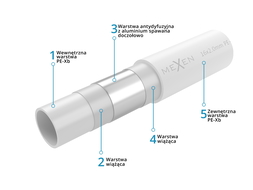
Mexen AL-O PE-Xb/AL/PE-Xb pipe 25 x 2.5 mm, 50 m - W97105-2025-50
€114.30 -19.96%
€91.49List price: €114.30
Lowest price: €91.49
Availability: In stock
Mexen PPR pipe 25 x 4.2 mm, PN20, 2 meters - W97300-2542-2
€2.80 -18.21%
€2.29List price: €2.80
Lowest price: €2.29
Availability: In stock