

















The question of how to choose a faucet for your sink is more important than it might seem at first glance. It’s worth spending some time on it when arranging your bathroom. In the market, you will find different types of faucets to easily match the fixtures to the space you are arranging. Remember that the correct choice of a sink faucet significantly impacts the bathroom's functionality, aesthetics, and comfort of use. Learn why it's important to consider aspects such as installation method, spout length, sink type, and other factors when purchasing such fixtures.
What will you learn from this article?
When choosing a sink faucet, consider various aspects. From our article, you'll learn:
- How to choose a functional faucet that matches your bathroom style.
- The different types of sink faucets and their installation methods.
- The advantages and disadvantages of freestanding and wall-mounted faucets.
- How to match the spout length and installation height to the sink type.
How do we categorize sink faucets?
An important criterion is the size and installation method of the bathroom faucet. You have two options:
- wall-mounted sink faucets,
- freestanding sink faucets, also known as deck-mounted.
Among the latter, we distinguish between:
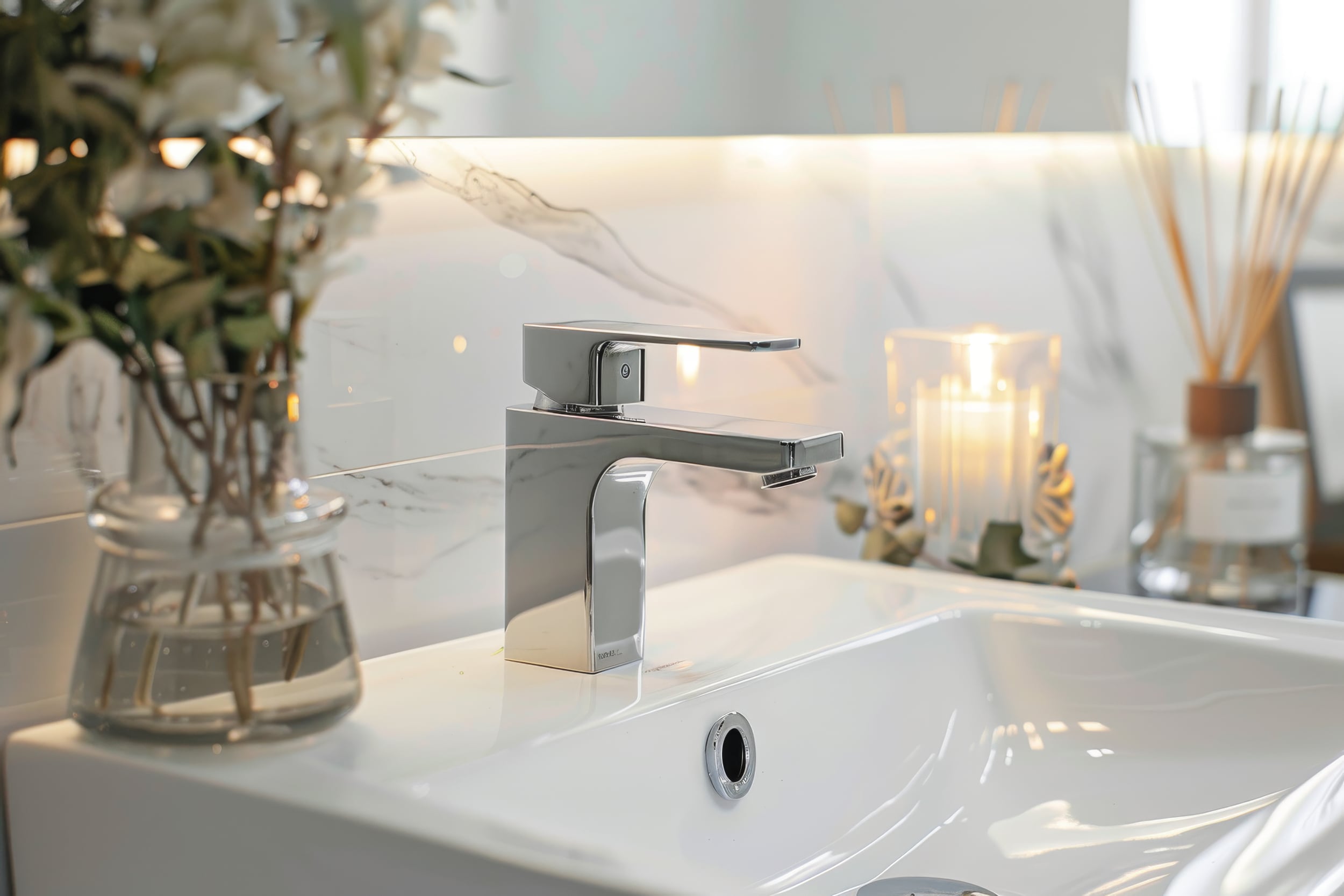
- high sink faucets mounted on the countertop,
- low sink faucets installed on the edge of the sink,
- floor-mounted freestanding sink faucets.
Models mounted directly on sinks are popular. An interesting but more expensive type of sink faucet is the freestanding model used with freestanding sinks. This type of fixture is mainly intended for large bathrooms or bathing rooms. Freestanding faucets offer exceptional aesthetic qualities and bring a decorative element to the interior.
Another important criterion is the number of handles. In this case, consider whether you will opt for a traditional faucet with two knobs or choose a single-handle mixer. Touch-free sink faucets are an ideal solution for guest bathrooms or restrooms.
Freestanding or wall-mounted model – how to choose a faucet for your sink?
Choosing the right bathroom faucet affects the daily comfort of use and the overall appearance of the interior. When deciding on a purchase, pay attention to several key points such as faucet types and installation method as well as dimensions, including spout length. It is particularly important to match the size of the sink faucet to avoid water splashing. I will now explain the advantages and disadvantages of freestanding faucets and the attributes of wall-mounted faucets.
Freestanding sink faucet – pros and cons
Freestanding sink faucets are popular due to their practicality and wide selection in terms of design. They suit countertop sinks, undermount sinks, or washbowls. Before deciding to buy, consider several factors to meet all expectations and complement other fixtures.
The material affects durability and scratch resistance. Ensure the faucet has a proper aerator for significant water savings while maintaining a comfortable stream. The faucet head should be solid to avoid wear issues.
Check for easy gasket replacement and spare part availability to ensure long-term use. Consider the spout shape which should be practical and suit the sink's size and type. Common choices include:
- Standard spout — provides an aerated stream, resulting in a smooth, soft water flow.
- Cascade spout — supplies an innovative waterfall stream, wide and flat. The flowing water adds a decorative aspect to larger bathrooms.
Another important aspect is the sink faucet's height. Freestanding options are either low or high. Low freestanding fixtures are good solutions for sinks with faucet holes. High freestanding faucets are perfect for modern bathrooms with countertop sinks.
Advantages of a freestanding sink faucet:
- ease of faucet installation,
- wide range of models (e.g., black, chrome, brass),
- easy water stream adjustment,
- comfortable height for hand washing,
- versatile styling for different bathroom styles,
- multiple spout length options to suit different sink sizes.
Disadvantages of a freestanding faucet:
- requires a suitable hole for the faucet,
- needs precise size selection to avoid water splashing issues,
- its height may be inconvenient for children or the elderly.
Wall-mounted faucet – pros and cons
Wall-mounted faucets are a popular solution. Note the spout reach and the distance from the sink. Before installation, check the height for comfortable use and hand washing. Ensure the size to prevent splashes beyond the sink's edge.
Wall mounting can be more aesthetic if you prefer a minimalist interior finish. The faucet doesn't have to be fully visible — for concealed faucets, only the spout and handles are external, enhancing aesthetics. Concealed installation occupies less space and is less prone to mechanical damage. A concealed faucet complements modern, loft, and traditional interiors.
Wall-mounted options work well for countertop sinks without a faucet hole. Many choose a wall-mounted bathroom sink faucet to save counter space. This is not only practical but also convenient, especially for small spaces.
Another advantage is setting the height according to user height, unique ceramic forms, or other elements.
Advantages of a wall-mounted faucet:
- saves counter space,
- elegant appearance (especially concealed models),
- can be installed at any height,
- greater flexibility in bathroom design,
- no limitations from ceramic faucet holes.
Disadvantages of wall-mounted faucets:
- requires precise installation planning,
- difficult access to hidden parts in case of failure,
- not all walls are suitable for installation,
- harder to correct positioning errors,
- hard to match faucet to pre-installed ceramics.
Which sink faucet is most convenient to use?
When purchasing a bathroom faucet, pay attention to the height and spout length. It should reach the sink bowl without spilling water over the ceramic edge. For a freestanding faucet installed in small inset sinks, choose an appropriate size with a shorter spout to prevent splashing. This sink must have holes for a faucet.
For a large sink, don't install a faucet with a short spout that barely overreaches the bowl edge, as it will be uncomfortable. Choose a model with a long body and shaped spout. In this case, one of the cascade models will work well. It will be functional and enhance the bathroom's aesthetics.
When choosing a wall-mounted sink faucet, ensure its size and placement are proper. It should be 25-35 cm above the sink rim for easy water flow access. For retro bathrooms, choose a faucet in old gold, white, or black with stylized knobs. Match all fixtures to your bathroom style.
The best bathroom faucets for countertop sinks
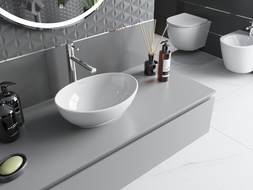
For countertop sinks, faucets placed beside the bowl look attractive. Remember to add the bowl’s depth, around 15 cm, to the faucet height. The spout length should match half the sink’s width. This ensures the water stream is directed centrally into the bowl. Choose a faucet for a counter-installed sink when accessible, with enough countertop space for cosmetics and toothbrush accessories. Then, the bathroom space will be optimal and comfortable for everyone.
When selecting faucets and other bathroom furnishings, consider the room size. A countertop sink looks best in large interiors. Smaller bathrooms without space for a large countertop can use cabinets. Just match furniture, ceramics, and elements for a unique style. Now that you know how to choose a faucet, check Mexen’s impressive models.
Summary
If you wonder how to choose a faucet for your sink, this article provided tips to ease your decision. Various faucets were discussed, including concealed and freestanding. Selection depends on style, space, and functionality. To avoid splashing, improve comfort, and enhance aesthetics, consider the shape, height, and length of the faucet spout. The final choice also depends on sink size, installation type, and location — counter, wall, or beside the bowl.
When choosing bathroom fixtures, pay attention to material, color, elements like included plug, and handle comfort for water temperature. A suitable faucet impacts cleanliness, convenience, and the visual result of arrangements. If you read this guide, you now know how to choose a faucet that fits your needs, space, and bathroom style.
Related products
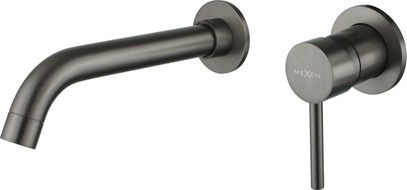
Mexen Alma concealed washbasin faucet, brushed gun gray - 75015-66
€98.20 -19.97%
€78.59List price: €98.20
Lowest price: €78.59
Availability: In stock
Mexen Dorado freestanding bathroom sink faucet, black - 747334-70
€208.90 -19.97%
€167.19List price: €208.90
Lowest price: €167.19
Availability: In stock
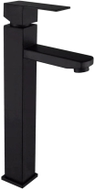
Mexen Emma tall black sink faucet - 71910-70
€39.30 -19.87%
€31.49List price: €39.30
Lowest price: €31.49
Availability: In stock
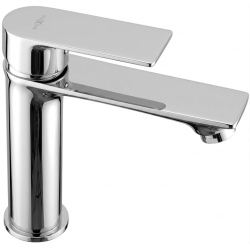
Mexen Royo washbasin faucet, chrome - 72200-00
€60.70 -19.95%
€48.59List price: €60.70
Lowest price: €48.59
Availability: In stock
Mexen Rumba high sink faucet, gold - 73510-50
€82.20 -19.96%
€65.79List price: €82.20
Lowest price: €65.79
Availability: In stock