
















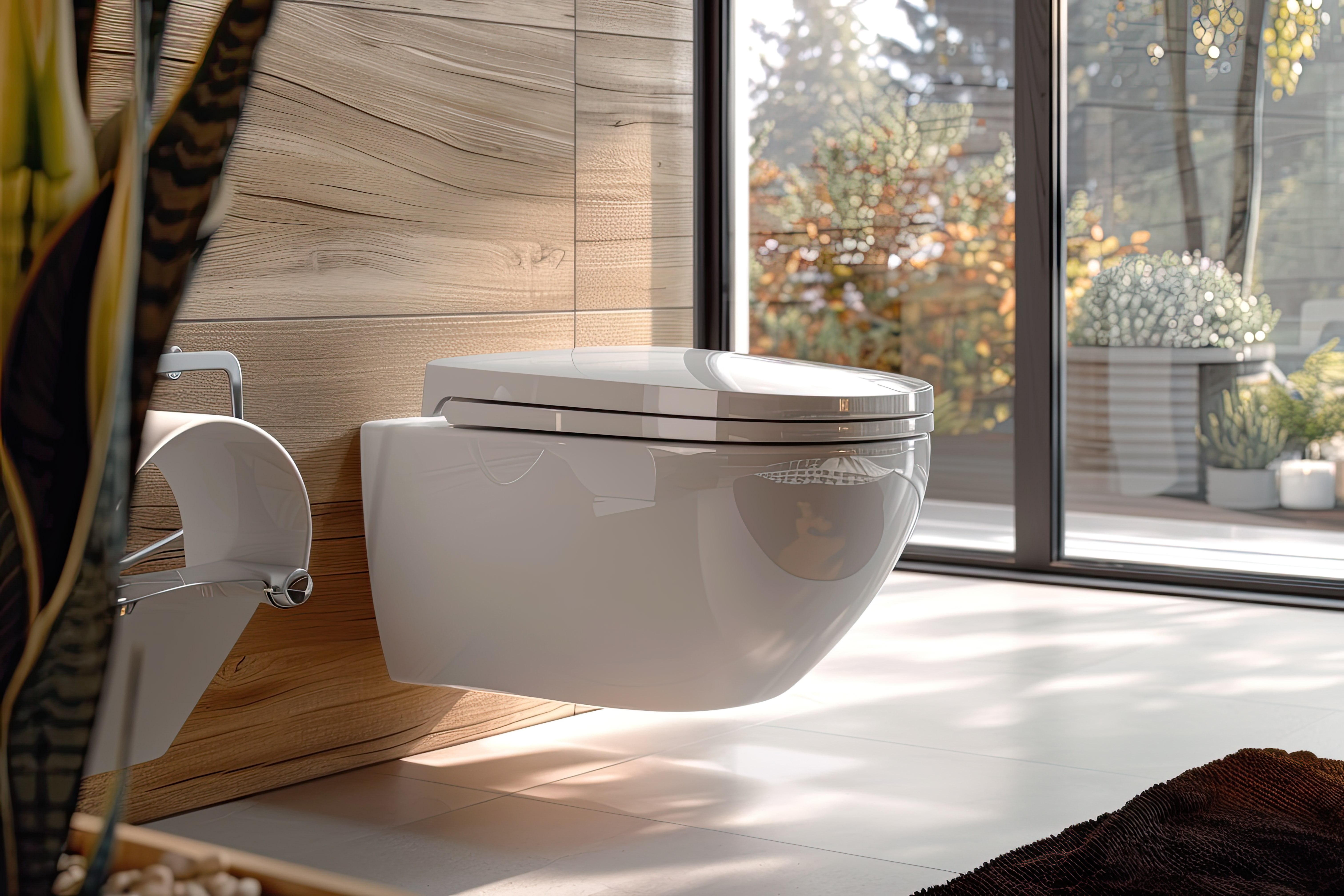
WC frame enclosures and wall-hung toilet bowls are currently the most popular solutions in Polish homes. Thanks to their modern design and smaller space requirements, they have effectively dethroned floor-standing toilets. However, these are not the only features that have made them so popular. A concealed frame hidden in the wall provides better sound insulation for flushing noises, makes floor cleaning easier, and means that exposed pipes no longer have to spoil the appearance of your bathroom. Read our article to learn how to properly enclose a concealed WC frame.
What will you learn from this article?
Wall-hung toilets with a cistern concealed beneath the plaster are the solution most commonly used in modern bathrooms. Enclosing a WC frame is practical and aesthetically pleasing. In this article, you will learn:
- Which WC frame will work well in your bathroom?
- How do you build a WC frame enclosure?
- What materials should you use to enclose a WC frame?
Which frame should you choose?
When choosing a concealed WC frame, make sure it is properly suited to the wall you have in the designated toilet area.
Concealed frames are divided into two main types:
- For masonry walls, you can choose a frame designed for heavy-duty installation. It is slightly thinner because the load is supported mainly by the masonry walls. During installation, it is enclosed with bricks on the sides and from below.
- Much more often, a frame for lightweight installation is required. It is used when the concealed system is installed on drywall walls. This solution is slightly more expensive, but it makes the final structure very stable. It is screwed to the floor, so its weight is supported mainly by the base.
Find out more about which WC frame to choose for your bathroom.
What do you need to do before building the concealed frame enclosure?
An important step before installing a concealed WC frame is properly planning the work and taking accurate measurements. Frames take up an average of approximately 40 cm in width and 120 cm in height. Their thickness is approximately 20 cm. You must also take the size of the ceramic toilet bowl into account. Standard dimensions are approximately 40 cm wide and 60 cm long. Build the concealed frame enclosure only after assessing whether using the WC will be comfortable once the installation is complete.
The time required to build the enclosure depends largely on the plumbing connections and sewer pipes. Pay particular attention to carrying out this stage of the work correctly. The place where you install the frame is determined by the position of the WC drainpipe. Apartment buildings often have a complicated installation consisting of a network of pipes, which can make building a concealed frame enclosure more difficult. In this situation, you can commission a professional to connect the WC to the vertical drain. Installation usually does not cause major problems. However, it is necessary to connect the WC to the vertical drain using plastic pipes. Metal-braided hoses will not be suitable for this purpose.
Remember that if the drain is located to the side of the frame, the distance between the WC and the wall may change. Building the concealed frame enclosure in this case will reduce the bathroom space. A flexible WC drainpipe may be helpful. It will help direct the drain correctly and save the necessary space.
.jpg)
Practical solutions for installing a ready-made frame enclosure
Only after making sure that the pipes and drain have been properly installed should you screw the frame and cistern to the wall and floor. A hose supplying the appropriate amount of water is also essential; the flush tank usually has a capacity of approximately 6 liters.
Make sure that the WC bowl is ultimately positioned approximately 40 cm above the room floor. This is especially important if your bathroom floor tiles have not yet been laid. Carefully measure the distance from the floor, as this will determine how comfortable the WC is to use.
Before installing the WC bowl, however, you must properly enclose the concealed frame. Use a waterproof drywall board. You can recognize it by its characteristic light green color. Also remember to purchase the appropriate amount of metal profiles, liquid membrane, self-tapping screws, and quick-mounting wall plugs. Make sure to choose a concealed frame compatible with the selected WC bowl. At a building materials store, customer advisors will certainly support you with their expert knowledge and help you choose all the necessary accessories.
WC enclosure — step by step
- The first step when installing a concealed WC frame enclosure should be to build a suitable structure from profiles. Assess how much space you need for the concealed WC frame. In small bathrooms or separate toilets, the WC frame enclosure is often extended across the entire width of the recess or room. This prevents small spaces that are difficult to clean and use from forming, while the bathroom looks aesthetically pleasing and modern. Attach the profiles to the wall using mounting plugs to stabilize the entire enclosure.
- Remember to cut the drywall boards to the appropriate size. You need to drill holes in the boards for the flush button, drain, and water supply pipe from the cistern. It is best to use a hole saw designed for cutting openings for this purpose. Concealed frames usually include suitable templates to make this easier.
- Also make sure to properly prepare the mounting plugs where the toilet bowl will be installed.
- Next, screw the boards to the concealed WC frame and to the completed profile structure. Use the appropriate types of screws for this purpose. Many people choose to use two layers of 12.5 mm plasterboard, which significantly increases the strength of the finished structure and reduces the risk of cracking the ceramic cladding.
- Strips of insulating tape placed beneath the profiles and against the wall will minimize vibrations in the wall. This will increase WC comfort and provide better acoustic insulation. It is also worth using sealing tape at the board joints and coating the entire structure with liquid membrane.
- You can finish the structure in various colors and with different materials. Considering the conditions in the bathroom, the most common choice is ceramic tiles. In many bathrooms, the frame enclosure is covered with a different type of tile than the rest of the room. This looks very attractive and helps distinguish the WC area, creating greater privacy. Separating the toilet area with a partition wall also supports this aspect. Prime the board surface before laying the tiles.
- After finishing the wall and grouting the tiles, you can install the WC bowl. Slide it onto the mounting studs using the factory-prepared holes, tighten it, and level it after checking for leaks. Once installation is complete, place the WC seat and flush button in their proper positions. The final step is to apply silicone around the toilet where it meets the tiles. Use sanitary silicone.
Check how to install a concealed WC frame.
Professional toilet enclosure tailored to your bathroom space
By considering the dimensions, fitting the installation to the available interior space, and ensuring the durability of the structure, you can prepare a WC frame enclosure that will last for years. The work requires care and the use of moisture-resistant materials. The WC enclosure will withstand the difficult conditions in the bathroom and remain attractive for a long time.
Related products
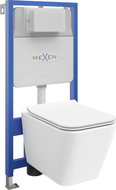
Mexen Cube WC Concealed Cistern Set Fenix Slim with WC Bowl and Soft-Close Seat, White Gloss - 61030924000
€407.20 -19.99%
€325.79List price: €407.20
Lowest price: €325.79
Availability: In stock
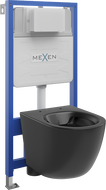
Mexen Lena WC Concealed Frame Set Fenix Slim with Toilet Bowl, Black Matte - 6103322XX85
€417.80 -19.99%
€334.29List price: €417.80
Lowest price: €334.29
Availability: In stock
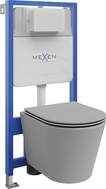
Mexen Rico Fenix Slim WC Concealed Set with WC Bowl and Soft-Close Seat, Light Gray Matte - 61030724061
€539.30 -19.99%
€431.49List price: €539.30
Lowest price: €431.49
Availability: In stock
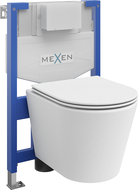
Mexen Rico WC Concealed Set Fenix XS-F Frame with WC Bowl and Soft Close Seat, Matte White - 68030724001
€510.70 -19.99%
€408.59List price: €510.70
Lowest price: €408.59
Availability: In stock
- New
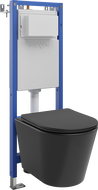
Mexen Rico WC Concealed Set Narrow Frame, Corner Tex W with WC Bowl and Soft-Close Seat, Matte Black - 610530721085
€371.40 -19.98%
€297.19List price: €371.40
Lowest price: €241.62
Availability: In stock