











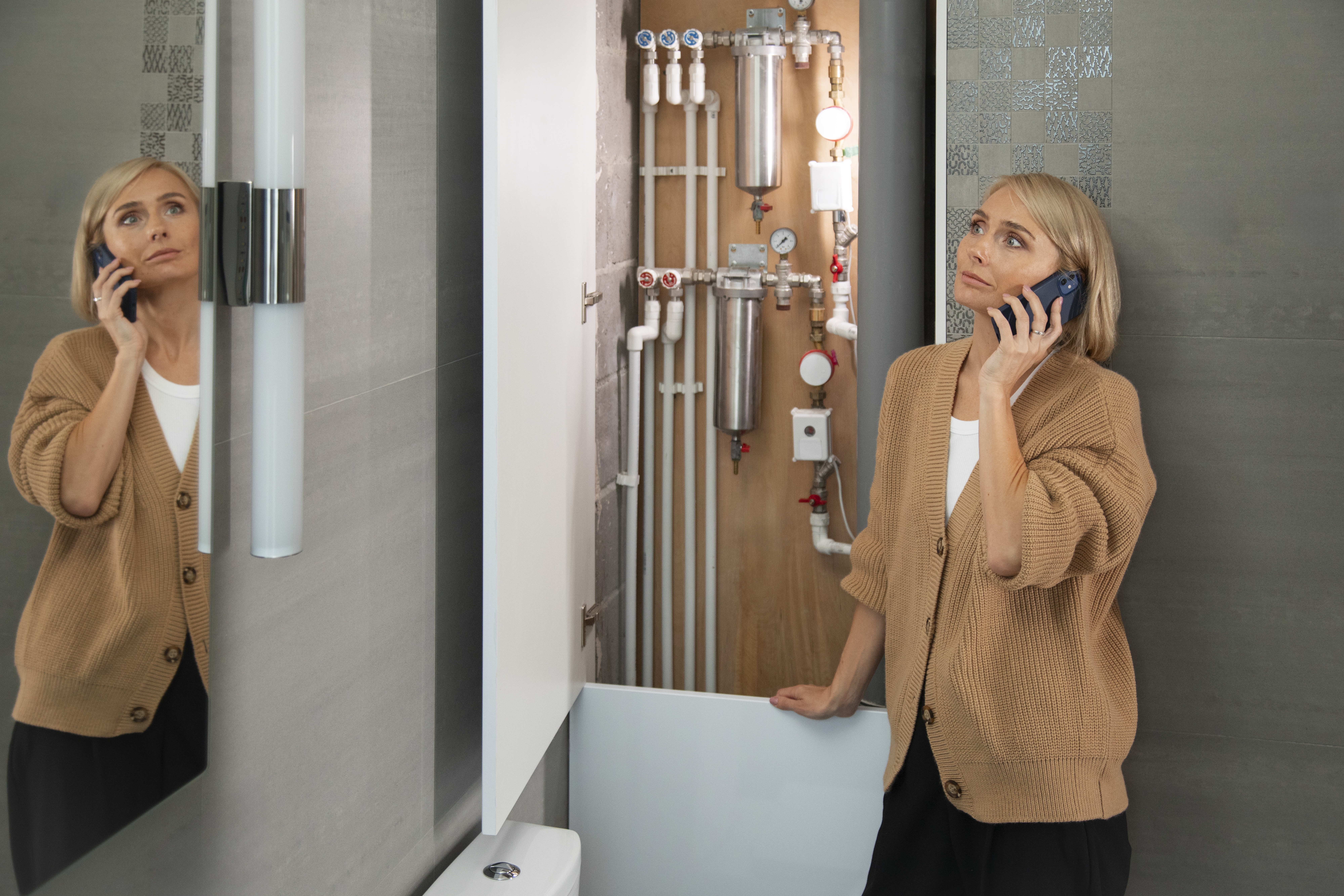
One of the challenges in renovation is how to hide pipes in a small bathroom. Pipes are an integral part of the plumbing system and cannot be omitted if you want a functional bathroom. To enhance the interior aesthetics, use solutions that help conceal them. The room will visually gain lightness and be optically enlarged.
What will you learn from this article?
Concealing pipes in the bathroom is a task worth undertaking to improve the functionality and aesthetics of the interior. From this article you will learn:
- What is the most popular method for concealing pipes in the bathroom?
- What should you mention when ordering furniture intended to conceal pipes?
- Which decorative tricks can help hide sewer pipes in a small bathroom?
How to hide pipes in a small bathroom using drywall?
A popular way to enclose bathroom pipes is with drywall. However, keep in mind that this solution will reduce the bathroom's space, which can be problematic with small square footage
Concealing bathroom pipes with drywall is effective for both walls and ceilings. A good design will allow you to create additional storage spaces in the form of niches and shelves. Simply install aluminum profiles, and attach the drywall to them.
A drywall enclosure in the form of a suspended ceiling is a common solution in modern bathrooms. You can place small light fittings or LED strips, which will provide spectacular and decorative lighting for the interior. Used in this form, drywall allows for hiding pipes, additionally reviving the bathroom design.
Concealing pipes with bathroom furniture
If you have a really small and narrow bathroom, it's worth using furniture to cover the pipes to appropriately utilize the space and gain additional storage room. Check also other ways to arrange a narrow bathroom.
Cabinets with a sink
A tangle of pipes under the sink usually does not look aesthetic. Cabinets with a sink offer a solution to this problem. It's worth opting for a vanity cabinet with a cutout for the siphon and an appropriate depth. Visible pipes will be concealed, and you'll gain storage space for cosmetics, cleaning products, and other toiletries.
Surrounds by the toilet
A discreet way to conceal pipes by the toilet is with furniture surrounds or ready-made panels fitted to toilet frames. The bathroom will gain an aesthetic aspect, and valves won't be visible.
Ways to conceal pipes in the bathroom with decorative tricks
If you're looking for quick and low-budget solutions, opt for shelf-covers. They allow you to hide horizontal pipes while simultaneously creating a practical nook for small items. You can place them above horizontal pipes. They consist of a cover strip and a nook where you can place items like cosmetics. The shelves look aesthetic, and at first glance, no one will guess that their main purpose was to enclose bathroom pipes.
You can also use ready-made covers that can be removed at any time to access the pipes. They serve both a practical and decorative function. Their installation is simple, and ready options are available on the market to suit various bathroom decor styles.
Another solution for protruding pipes is pierced walls or screens. If you want the effect of enlarging the interior, place a mirror there as well.
In the case of covering gas pipes, remember about ventilation openings or partitions on the top and side. Safety is important here, and for heating or gas pipes, ready-made covers cannot be completely sealed.
Service technicians greatly appreciate when small bathrooms use panels or magnet screens to hide pipes. They provide quick access to installations without chiseling.
Covering bathroom pipes does not require significant financial investment. What matters is a good idea and safe execution.
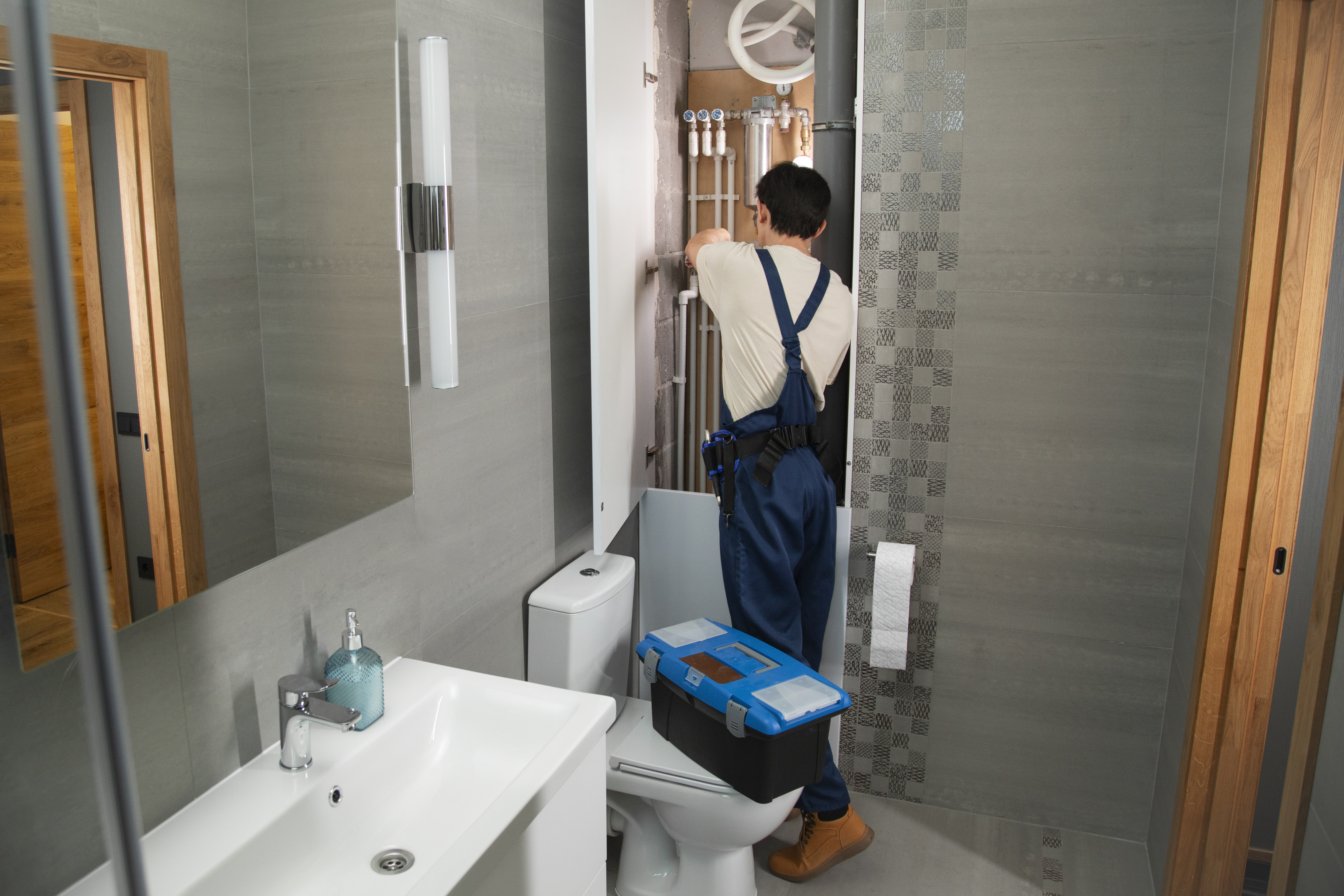
How do in-wall systems work for pipe casing?
In-wall frames are a popular solution in modern bathrooms for pipe casing. They are installed before tiling the walls. You can choose from two options:
- In-wall system for light casing — is enclosed with drywall.
- In-wall system for heavy casing — the in-wall frame is built into the wall.
Using this solution ensures the correct functioning of sanitary devices, while also gaining a modern bathroom appearance. You can create functional storage above the toilet frame in the form of a shelf for placing flowers, candles, and other decorative accessories.
Check how to arrange a very small toilet in an apartment.
Or maybe it's worth exposing pipes in a small bathroom?
Although for many people covering them is the first step to achieving an aesthetic interior, in an industrial-style bathroom, exposing pipes, cables, and installation elements is desirable. It highlights the raw atmosphere prevailing in the interior. Sometimes it's not worth looking for ways to hide pipes in a small bathroom, but rather how to aesthetically arrange them.
If you want to keep the pipes visible in the bathroom, complement the arrangement with tiles that mimic concrete. They look great with gold or black bathroom fixtures, as well as with dark furniture.
In any bathroom with limited space, you can hide pipes by hanging baskets with cosmetics, towels, or bathroom accessories on them. Previously unsightly pipes, painted in the right color, won't be as noticeable and will be practically used in an industrial arrangement.
Covering bathroom pipes in several ways
There are many ways to enclose pipes in the bathroom. Choose a method according to the installation layout in the room and the effect you want to achieve.
- Drywall enclosure — create constructions from aluminum profiles, to which you will mount gypsum boards.
- In-wall frames — are effective for hanging toilet bowls and bidets. With frames, you'll hide installations in the wall and give the bathroom an aesthetic look.
- Bathroom furniture — a vanity cabinet with a cutout, bathroom columns, and other furniture tailored to the available bathroom space will effectively conceal pipes, while also providing easy access to them.
- Covers — a trivially easy solution for hiding pipes in a room arrangement is to use covers that you can remove at any time.
- Exposing pipes — in some bathroom arrangements, leaving the pipes visible can be a good idea, giving the room a unique character.