





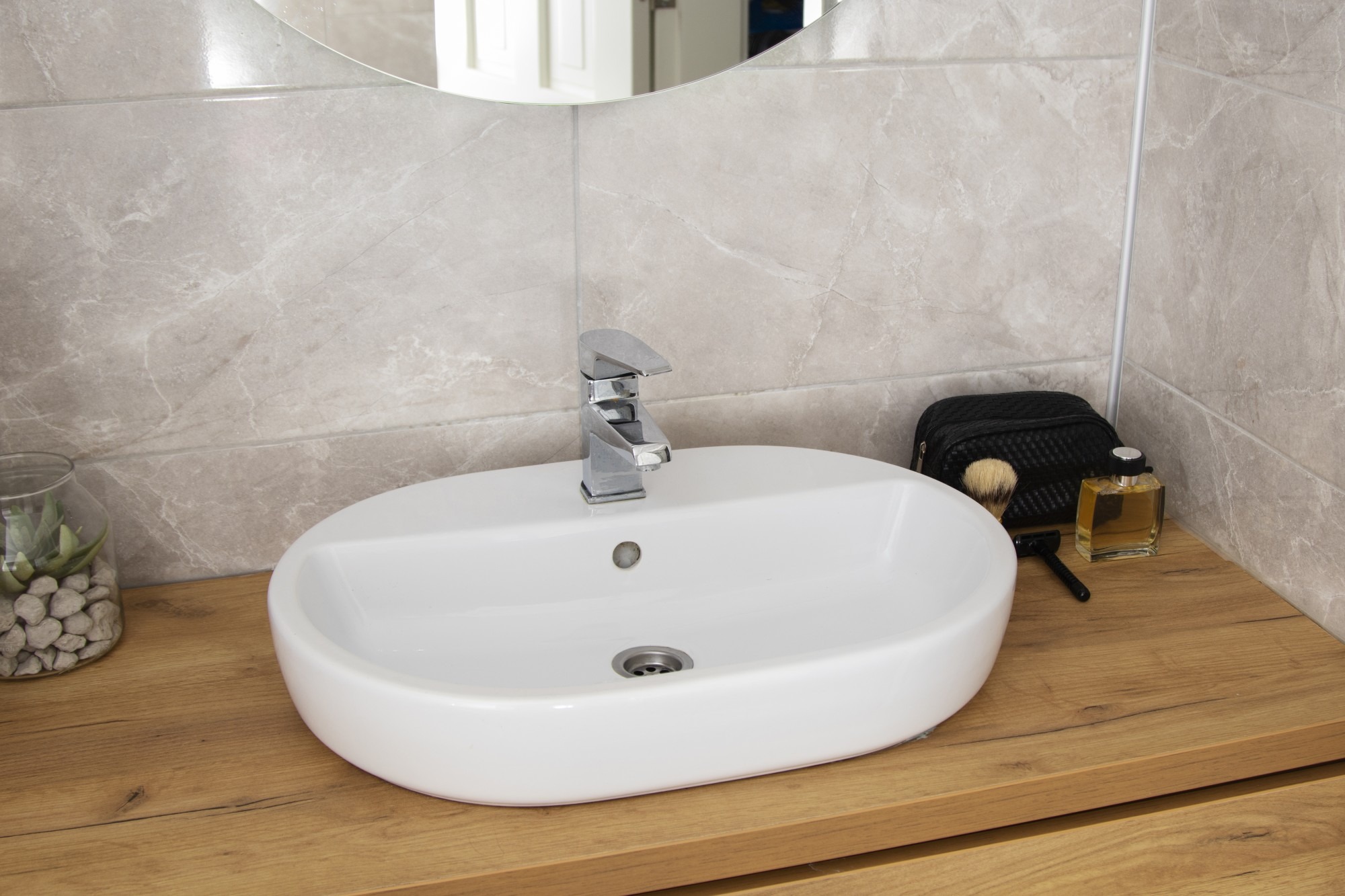
There are many types of washbasins, so you can choose from various models and match them to your bathroom decor. You need to consider not only the appearance but also the functionality of the basin. It's a purchase for years, so it's worth thinking it through carefully.
What will you learn from this article?
Choose the most comfortable washbasin for daily use, and using it every day will be very pleasant. From this article, you'll learn:
- What are the types of bathroom washbasins?
- Which washbasin is suitable for a small bathroom?
- Which washbasins require more maintenance?
What do you need to remember when choosing a washbasin for your bathroom?
Designing a bathroom is challenging. You have to make many important decisions at once, and later changes are very costly. They often require a general renovation. Therefore, it's essential to choose the right type of washbasin for the bathroom from the start. Besides an interesting appearance, it's important to pay attention to technical aspects, durability, and functionality.
Size of the Washbasin
The depth of the washbasin has a significant impact on comfortable use. A too shallow bowl will cause water to spill out and constantly splash the bathroom countertop. On the other hand, a too deep basin may make the room appear smaller. Optimal choices are models of medium depth. They allow for comfortable washing of hands, face, and teeth without taking up too much space.
Shape of the Washbasin
Round and rectangular bathroom basins are the most popular. If you want your interior to stand out with an individual style, opt for a fanciful shape. An unusual form will catch the eye.
Round and oval models visually enlarge the space, so they are an excellent choice for a small bathroom. Rectangular and square basins are a good solution when you have a lot of space. In challenging spaces, corner sinks work well.
Material of Construction
When choosing a washbasin, pay attention to the material it's made from. This affects the aesthetics and durability of the equipment you're introducing to the bathroom.
- Sanitary ceramics — a popular, durable, and easy-to-clean material, from which modern basins are made. Ceramic basins are stain-resistant and available in many colors and patterns.
- Composite — a material used for designer basins. They are resistant to abrasion, impacts, and chemicals.
- Glass — an ideal choice for small bathrooms, due to its lightness and unique character. These types of basins, because they are made of glass, are resistant to impacts and high temperatures. Regular cleaning is important due to water deposits that appear after almost every use.
If you choose the right material for your bathroom basin, you'll save time on cleaning and maintenance.
Installation of the Washbasin
The installation method depends on the type of washbasin. The countertop model is the easiest to install and works well in most bathrooms. In contrast, inset basins require precise preparation but are a good choice for small bathrooms where every square inch of space matters.
Checkhow to install a countertop washbasin.
What are the types of bathroom washbasins?
There are different types of washbasins available on the market. You can choose a specific model to fit your individual preferences. They differ in shape, material of construction, and installation method. It's worth paying attention to both aesthetic and functional aspects.
Countertop Washbasin
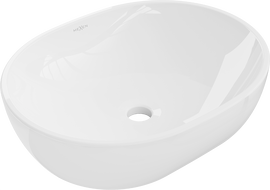
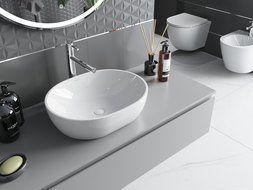
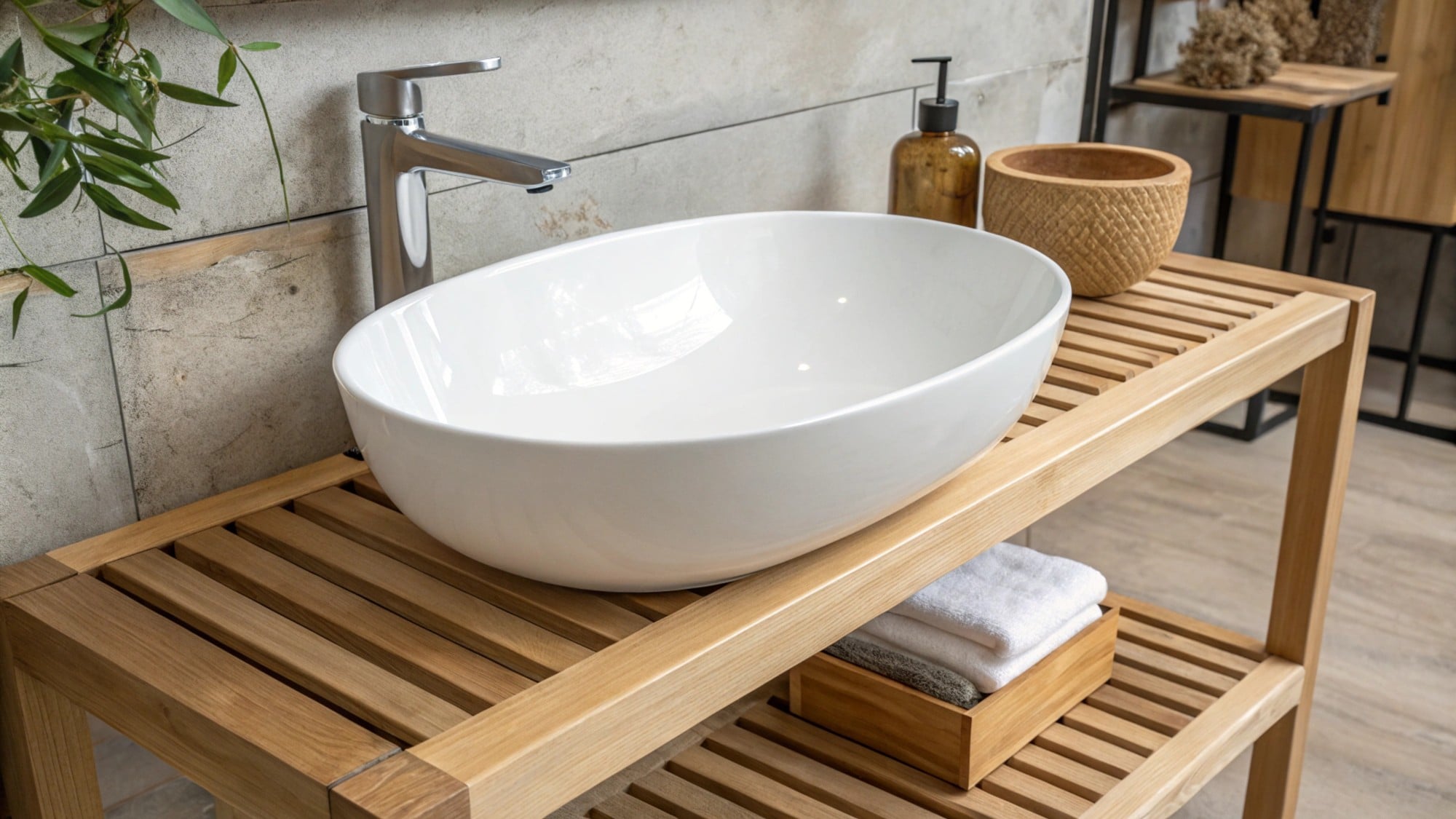
The most popular solution for most bathrooms is countertop washbasins. They are mounted directly on the bathroom countertop. They stand out for their functionality and make good use of space. Countertop models come in various shapes and sizes, so you can install them in both smaller and larger bathrooms.
Checkhow to care for a countertop washbasin
Installing a countertop washbasin is simple and quick:
- Preparation of the countertop — match the width and height of the countertop to the chosen basin model. Cut a hole and smooth its edges.
- Installation of the siphon — ensure efficient water drainage without leaks. All elements must be well-fitted. Ensure easy access to the siphon in case of failure.
- Fitting thewashbasin faucet — high freestanding faucets are best for countertop basins. Make sure to choose a model style that matches the basin and bathroom decor.
Countertop washbasins are a good choice for modern and elegant interiors. There's nothing stopping you from adding them to classic and minimalist arrangements.
Inset Washbasin
The installation of this model is made through a cutout in such a way that the edges of the basin can be aligned with the countertop surface. An integrated structure is created, which looks elegant and aesthetic. Inset washbasins fit perfectly in minimalist bathrooms. They allow for a large amount of workspace.
When choosing an inset basin, pay attention to the many available shapes and types. Both models with rounded and angular edges are popular. The installation requires high precision.
Under-Counter Sink
In spacious bathrooms, an under-counter sink is a good fit. This variant is installed entirely from below, hiding the bowl edge and leaving the countertop line intact. This solution guarantees the maximum amount of free space around the cleaning area and facilitates daily cleaning – water and dirt can be swept directly into the drain.
Wall Mounted Washbasin
A classic solution for small bathrooms is a wall mounted washbasin. It saves a lot of space, which is very important in small-sized rooms. It's good to pair it with a wall-mounted faucet.
Freestanding Basin
In any bathroom where design and avant-garde solutions are important, freestanding basins are perfect. You need plenty of free space to opt for them. They are an excellent choice for bath salons.
Freestanding sinks are characterized by a high and wide pedestal. They can be placed in various places in the bathroom, provided there is access to plumbing installations.
Which washbasin to choose for a small bathroom?
In small rooms, compact solutions work best. The basins available on the market usually have a width of 40 to 120 cm. Models with a medium bowl depth provide comfortable use without overwhelming a small space.
There are different types of washbasins available, but for a small bathroom, corner models are often the optimal choice. They allow effective use of a small area.
Using additional storage space is crucial in small interiors. Limit the number of items kept on top to organize the space. Consider furniture-integrated basins with cabinets. You have both a place to wash hands and store cosmetics.
Checkhow to arrange a narrow bathroom.
Various Types of Washbasins in Bathroom Designs
Manufacturers offer various types of washbasins suited to different bathroom styles. You have a huge selection. While you can choose from many models, selecting a basin that is both aesthetically pleasing and functional can be challenging.
- For a stylish, modern bathroom, choose a countertop basin — it looks fantastic, especially when paired with a high freestanding faucet.
- For fans of classic interiors, there are inset basins — fitting into an arrangement style where impressive solutions with a traditional advantage matter. You gain a large working surface. You can display cosmetics and perfumes on the countertop.
- In small modern interiors, furniture-integrated basins work well — you purchase a set and don't have to worry about integrating the basin with the countertop. On the edges of a ceramic basin, place a soap dispenser or a container for a toothbrush and toothpaste.
- For narrow and small bathrooms, choose a wall-mounted basin — the model is mounted directly to the wall, and the faucet is built-in or set into the bowl.
- For glamour interiors, under-counter basins fit — the bowl hidden under the counter looks elegant and highlights luxurious decor.
- Introduce freestanding basins into a bath salon — they serve as independent decorations. They work well where there is enough storage space and you can experiment with design solutions.
Explore the different types of bathroom washbasins. Choose a model that suits your needs and enjoy a functional bathroom.
Related products
Mexen Atena counter-top sink 80 x 46 cm, white - 25018000
€96.40 -19.93%
€77.19List price: €96.40
Lowest price: €77.19
Availability: 2026-06-10
- Design Days
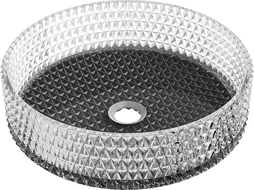
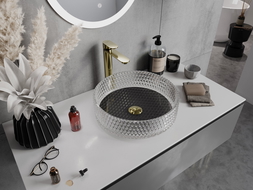
Mexen Aura glass countertop washbasin 39 x 39 cm, transparent/black - 24013971
€182.20 -19.98%
€145.79List price: €182.20
Lowest price: €145.79
Availability: In stock
- Design Days
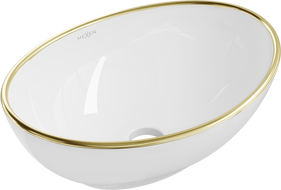
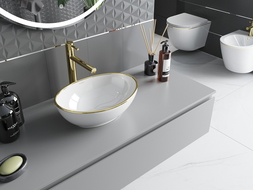
Mexen Elza countertop washbasin 40 x 33 cm, white/golden rim - 21014005
€82.20 -19.96%
€65.79List price: €82.20
Lowest price: €65.79
Availability: In stock
Mexen Sira freestanding sink 34 x 33 cm, matte black - 26023370
€389.30 -19.99%
€311.49List price: €389.30
Lowest price: €311.49
Availability: In stock
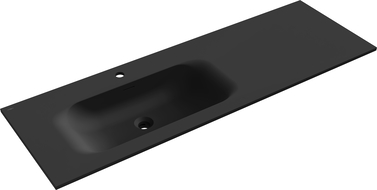
Mexen Vela recessed countertop washbasin left 141 x 46.5 cm, black matte - 25231471L
€328.60 -20%
€262.89List price: €328.60
Lowest price: €262.89
Availability: In stock