








The HEPA filter is commonly used in air purifiers, air conditioners, vacuum cleaners, hand dryers, and many other devices. It is well known to everyone who wants to protect against bacteria, allergens, and dangerous substances. It effectively captures solid particles of various sizes.
What will you learn from this article?
HEPA filters are appreciated mainly by allergy sufferers and people sensitive to pollution. They are used in many popular devices. From this article, you will learn:
- What is the HEPA filter made of?
- What particle size does the HEPA filter retain?
- What are the types of HEPA filters?
- In which devices are HEPA filters most often used?
What are HEPA filters and how do they work?
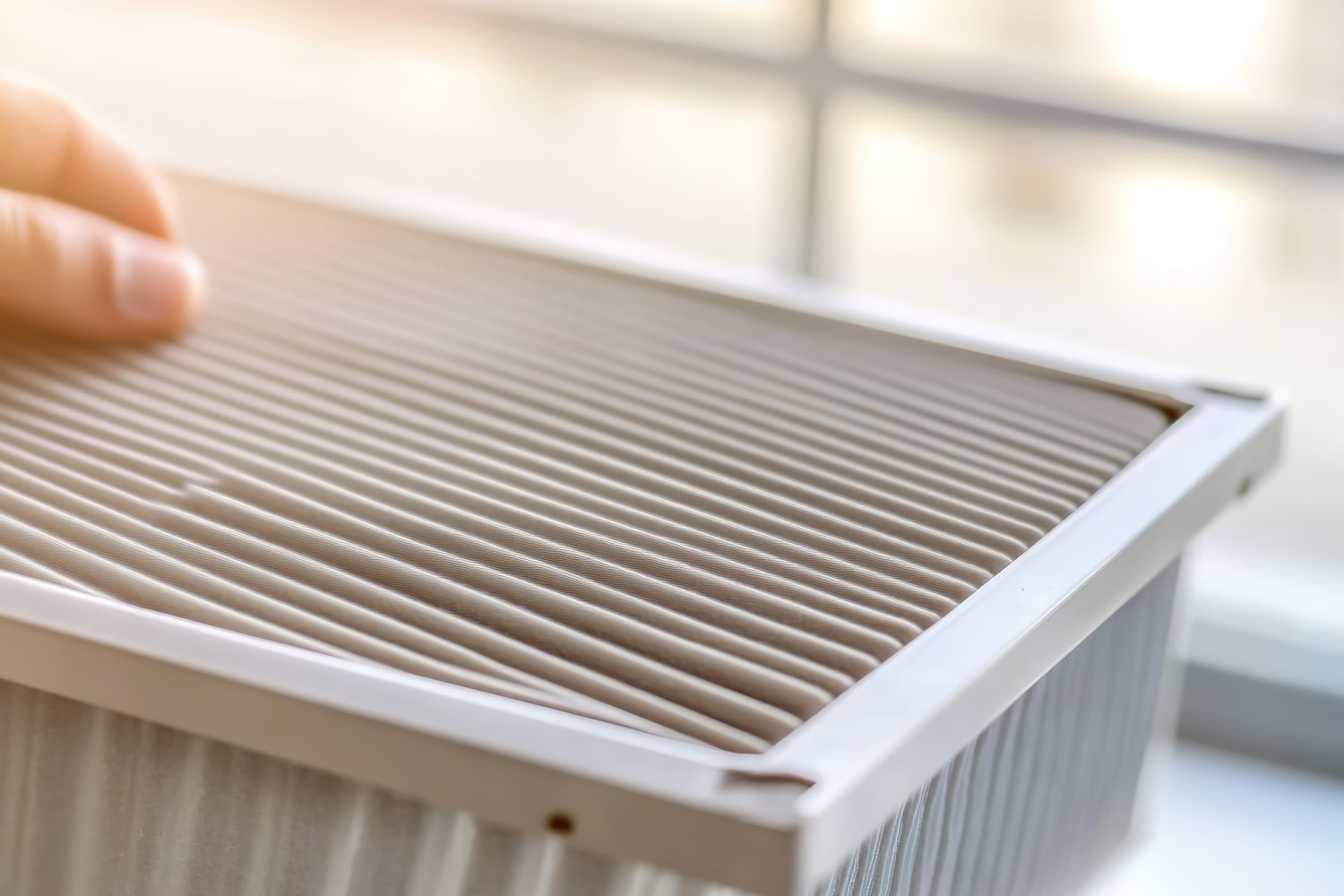
The acronym HEPA stands for High Efficiency Particulate Air Filter, which means a high-efficiency air filter. Initially, HEPA filters were made of fused glass. Currently, polypropylene is used for production.
The HEPA filter consists of thin sheets of polypropylene that resemble paper. They are arranged in a pleated shape. Individual fibers are arranged in such a way as to form microscopic pores. Due to the specific design, a HEPA class filter can capture particles of various diameters, even from 0.3 µm.
The filtration process consists of four mechanisms that affect different types of pollution:
- Screening — occurs when impurities are too large to fit between the filter fibers. They are retained. Unfortunately, they block the pores and reduce airflow, which affects the life of the HEPA filter. To limit this phenomenon, devices are equipped with a pre-filter. Its task is to capture the largest particles, i.e., dust, dirt, and hair.
- Diffusion — at this stage, the smallest impurities are captured, such as suspended dust and other small substances. They adhere to the filter fibers.
- Inertia — this mechanism allows for blocking impurities with high mass and size. They are heavier than air.
- Capture — a highly efficient HEPA filter also blocks medium-sized particles. They are too small to settle on the fibers through inertia but too large for the diffusion mechanism to work.
High filtration efficiency with HEPA filters is achieved through the combination of the above mechanisms. They can capture both particles as small as 0.003 µm and those with a diameter of 10 µm or larger.
Where and what do HEPA filters capture?
HEPA filters most commonly capture:
- pollen 5-100 µm,
- mold 2-20 µm,
- pet hair 0.5-100 µm,
- dust mite spores in dust 0.5-50 µm,
- suspended dust PM10 2.5-10 µm,
- suspended dust PM2.5 1-2.5 µm,
- bacteria 0.35-10 µm.
Due to the high efficiency of capturing dangerous pollutants from the air, HEPA filters are used in many popular devices. They are primarily used in air purifiers, air conditioning, vacuum cleaners, car air conditioning systems, hand dryers. They are worth using in homes but also in facilities particularly exposed to pollution, such as hospitals, laboratories, and medical offices.
Capturing microscopic particles from the air is a rigid requirement in the pharmaceutical, food, and electronics industries. HEPA filters are installed in military bunkers, laminar chambers, and air extraction installations.
Individual classes of HEPA filters
Due to the use of filters both at home and in the industrial and medical sectors, it became necessary to create an appropriate classification. The division is regulated by the European standard EN1822: 2009 and the ISO 29463:2011 standard. Three main types of filters were identified:
- EPA (Efficiency Particulate Air) — efficient air filters.
- HEPA (High Efficiency Particulate Air) — high-efficiency air filters.
- ULPA (Ultra Low Penetration Air) — air filters with very low penetration, which translates into the highest efficiency.
These groups are subdivided into sub-classes with varying filtration efficiency. HEPA filters are divided into:
- HEPA 13 — filtration efficiency is at least 99.95%. They are used in hospitals, food production plants, laboratories, the pharmaceutical industry, air purifiers, vacuum cleaners, air conditioning.
- HEPA 14 — the total filtration efficiency is 99.995%. They are used in hospitals with elevated standards, high-quality air purifiers, vacuum cleaners, and air conditioning.
The generally accepted rule is that household appliances most often use EPA 12 and HEPA 13 filters, and advanced devices use HEPA 14.
How do dryers with a HEPA filter work?
To ensure the highest level of hygiene, it is worth investing in a hand dryer with a HEPA filter for the bathroom. Mexen offers many innovative models with technology that reduces secondary hand infection and ensures microbiological cleanliness.
The HEPA filter can capture particles of various sizes. H13 provides a filtration efficiency of 99.95%, and H14 ranges up to 99.995%. Thanks to the filter being hidden inside a minimalist casing, it looks elegant and compact.
Hand dryers are available in many attractive shapes and colors, making them suitable for almost any bathroom arrangement.
Check how to arrange a bathroom in 2026. Discover the main interior design trends, the most fashionable colors, and materials.
Is it worth buying a vacuum cleaner with a HEPA filter?
An almost mandatory feature of a modern vacuum cleaner model is a HEPA filter. By using them in your home, you can:
- improve the air quality you breathe,
- protect against harmful pollutants,
- limit the growth of fungi and bacteria.
Find tips on how to quickly and effectively clean the kitchen.
The HEPA filter reduces bacterial presence in the air — remember to replace it regularly!
Finally, we want to remind you that simply having a device with a HEPA filter is not enough to ensure proper air quality and protection against exposure to viruses, bacteria, and fungi. Regular replacement is necessary. How often you should do this depends on the intensity of device use, but at least once a year.
Apply a few basic handling principles:
- Most HEPA filters are not washable — contact with water irreversibly destroys the dense weave of synthetic microfibers. Once the insert becomes clogged, it must be replaced with a new element recommended by the manufacturer.
- Take care of the pre-filtration condition — remember to regularly clean or replace the pre-filter. This automatically affects the lifespan of the HEPA filter.
- When you hear a drop in device performance or an unpleasant odor in the room during its operation, it's a sign that the HEPA filter needs to be replaced.
Related products
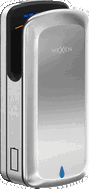
Mexen Ventaro-Pro pocket hand dryer, 1650 W, inox - 70K020-01
€742.80 -19.99%
€594.29List price: €742.80
Lowest price: €594.29
Availability: In stock
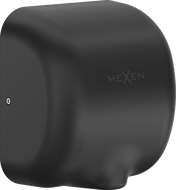
Mexen Ventaro-Q hand dryer, 1800 W, matte black - 70K060-70
€232.20 -19.99%
€185.79List price: €232.20
Lowest price: €185.79
Availability: In stock
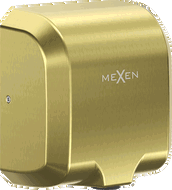
Mexen Ventaro-U hand dryer, 1800 W, brushed gold - 70K030-55
€267.80 -19.98%
€214.29List price: €267.80
Lowest price: €214.29
Availability: In stock
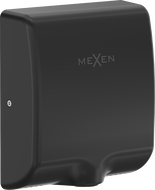
Mexen Ventaro-V Slim hand dryer, 1000 W, matte black - 70K041-70
€214.30 -19.98%
€171.49List price: €214.30
Lowest price: €171.49
Availability: In stock
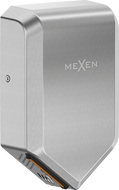
Mexen Ventaro-Yh Slim hand dryer, 1000 W, stainless steel - 70K093-01
€221.40 -19.97%
€177.19List price: €221.40
Lowest price: €177.19
Availability: In stock